Review by Noaman G. Ali / Photos by Steve da Silva
Rating: 4/4
Last week I sat in a meeting called by a councillor in one of Toronto’s “priority neighbourhoods,” populated by immigrants and working-class folks.
He talked about how the police run drop-in programs for youth so that they can get to know them, and keep an eye on them, so that they can easily question youth about other youth who they are running with and get them to snitch. When these youth grow up and maybe get into trouble, police will know who they are beforehand. The youths will be “known to police.”
“Known to police” is a phrase that gets tacked onto mainstream media reports about a lot of crime and violence. “Known to police” is supposed to mean that the persons involved were already suspicious, shady, irresponsible to begin with. Isn’t this what they said about Ahmed Hassan after he was shot dead at the Eaton Center on June 2, or Nixon Nirmalendran, who died of his wounds over a week later? Maligned, not mourned. What the media didn’t tell us was that one of the main reasons Nixon was known to police was for witnessing Alwy Al-Nadhir’s murder at the hands of police on the night of October 31, 2007.
For those of us who don’t live the daily reality of police terror in this city, Jane and Finch’s resident people’s theatre troupe, Nomanzland, offers us a glimpse into what it’s like to be “known to police”:
It’s about neighbourhoods that are systematically ignored, neglected and oppressed. It’s about youths who have no job options, even when they get university degrees, because of their race and class status in a system where there’s a lack of jobs overall. It’s about families trying to make ends meet and build community in difficult conditions. It’s about politicians and developers trying to make a quick buck off of the land on which poor people live through “revitalization.”
And it’s about treating children and youths as criminals or potential criminals — about dealing with problems through racist and oppressive policing rather than through building communities and providing opportunities to the people there.
‘Known to Police’ doesn’t try to hide any of the problems of the hood. It lays them out for us to see — it revolves around two beefing youth, Dante and Kelvin, who are involved in criminal activities. But it also shows us the lived realities of the peoples involved, and that the problems aren’t with individuals but with the system that they live in.
We meet a group of women who are organizing against politicians’ and developers’ attempts at “revitalizing” — that is, gentrifying — the neighbourhood. We meet an OG revolutionary who resolves the beefing and seeks to unify the hood to build a revolutionary movement. We meet mothers who are single-handedly raising their families and keeping their kids on the right track. We meet people who tried to escape the violence of their homelands (caused by Canada and other Western powers’ imperialism) only to find themselves facing violence in the hood.
We see the cops killing yet another youth in the hood, and getting away with it – a likely reference to Junior Manon’s murder on York University campus on May 5, 2010. We also meet an undercover cop entrapping youth in a web of violence by selling them the same guns that they’re banging out on each other.
All of this is put in the context of world revolution — the uprisings of working people in Egypt and Tunisia are our backdrop. Rhymes, raps and songs are dropped throughout the play — all of them written by the actors themselves. And the acting is amazing, it’s easy to forget that we’re watching a play. (No doubt, because so many of them are from the neighbourhood.)
The play was raw enough to provoke an older, white audience member to ask which parts of the play are based on actual events? “All of it. All of it” – answer a number of cast members, almost in sync.
In the end, the youth of Nomanzland tell us that there are no easy solutions to the problems — and that we certainly can’t rely on politicians of any party. Instead, just like the peoples of the Arab uprisings, communities have to organize to build self-reliant organizations and build their own power to take on the cops, the politicians and developers.
They tell us that we need a proper revolution.
Known to Police was performed at the Young People’s Theatre, June 15-17. Hit up Nomanzland and get them to perform the play in your hood.
Gaza – At the practical level the forced withdrawal of the Israeli Occupation Forces and the Israeli settlers from Gaza is an important victory for the Palestinian resistance. But despite this, or perhaps because of it, the Israelis are waging a relentless war against the Palestinian men, women and children living in this small area. This war targets the basic economic activities and material survival of Palestinian masses, affecting the working class and the poor most intensely.
A few examples:
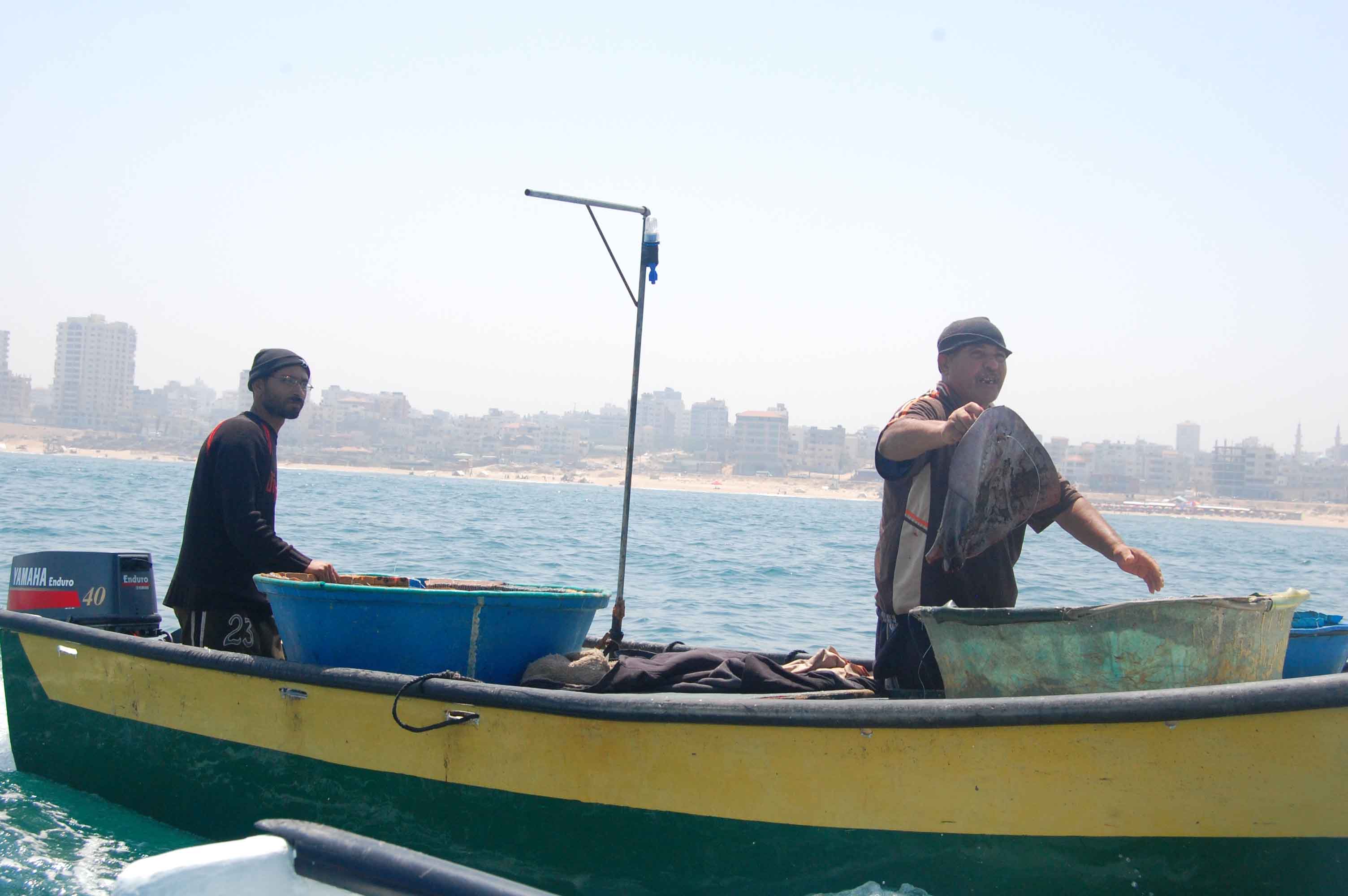
Fishing, a key element of the Palestinian economy in Gaza, has been devastated. Israeli war ships prevent fisher-folk from reaching their traditional fishing grounds and limits them to a thin strip over sandy beach adjacent the coast where the fish are few and small. Palestinian fishermen who try to get to their deep water fishing grounds are fired upon by the Israelis and face being injured or killed or being imprisoned and having their fishing boats confiscated (stolen). Thus 70,000 people, some from families who have fished these waters for centuries, are denied access to their basic livelihood by the siege.
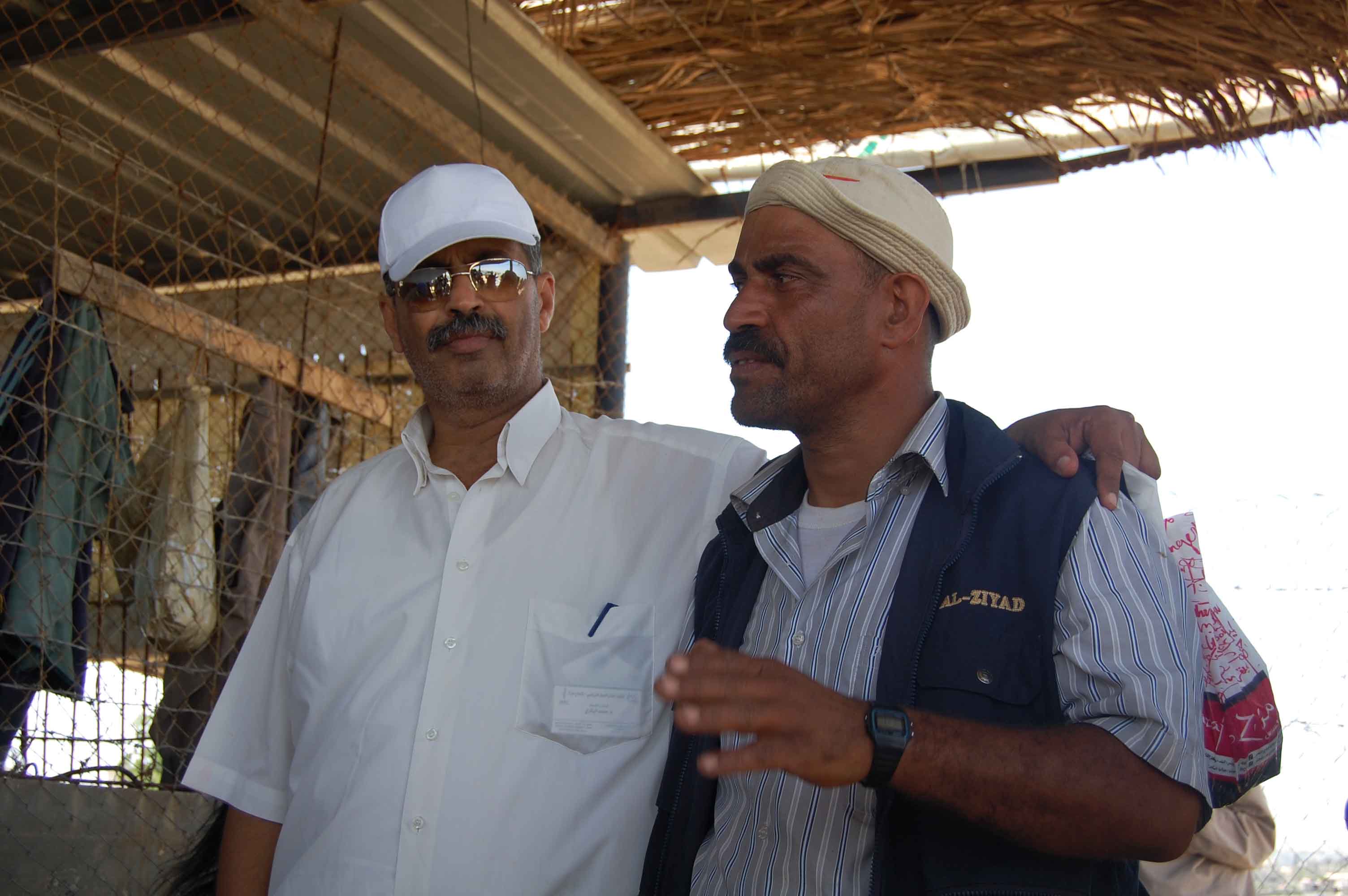
Farmers near the unilaterally declared 3 km buffer zone that runs along the ‘border’ with the Palestinian lands occupied in 1948 face a similar attack on their livelihood. This farmland is important not only to the farmers who work it but for the food security and sovereignty of all Palestinians living in Gaza. All along this strip the Israelis destroyed the Palestinian farms including orchards of citrus and olive trees. When farmers try to go to their farms they are fired upon and many have been killed. We met with farmers who persistently return to their lands, risking their lives to plant crops that face a high chance of being destroyed by the Israelis before they can be harvested.
Many Palestinians living in Gaza used to work in factories and businesses in the Palestinian lands occupied in 1948. These Palestinians are now denied the right to cross the ‘border,’ as Israel has pursued a strategy of substituting super-exploited Palestinian labour with super-exploited migrant labour from Asia and North Africa in its dirtiest, worst paid and most dangerous areas of work. Meanwhile the siege allows the free entry of Israeli products and ‘international brands’ like Pepsi and Coke but prevents import of materials needed to repair factories and production destroyed by the Israeli occupiers and severely restricts exports, limiting the potential for indigenous economic development. As a consequence Palestinian workers in Gaza face chronically high rates of unemployment (as high as 40%) and poverty (mostly living on about $2 per day).
So, even when the bombs are not actively dropping, the war on the Palestinian masses living in Gaza continues. Organizations like the Union of Agricultural Committees and the Palestinian General Federation of Trade Unions and the Union of Women’s Committees who challenge these brutal violations of Palestinian economic rights are part of the broad resistance to Israeli war and occupation including military, political and cultural resistance.
Aiyanas, from Gaza, June 21, 2012
It was exciting and inspiring to meet face to face with these brave and tireless women who continue to dedicate themselves to the struggle against Israeli occupation despite enormous odds and grave challenges. We analyze that women are at the crux of imperialism, super exploited as both a source of free reproductive labour in the home and in the community, and as cheap labour within the working class. As Comrade Parvati from the Communist Party of Nepal (Maoist) so brilliantly explained, women face a three-prong struggle: the struggle for national and social liberation, the inner-party struggle to advance women’s leadership at great odds given the enormity of the chauvinism and male violence women face in society, and the inner struggle against the internalized sexism against which women themselves must struggle. The stories of both hardship and resistance the delegation heard today highlighted that Palestinian women bravely face this three-prong struggle.
The heart-wrenching stories of women arrested for defending their land, their homes, and their husbands and sons from Israeli aggression are ones I will never forget. Of women forcefully dragged from their homes and sentenced to serve time in Israeli prisons for resisting displacement and Israeli encroachment into historic Palestinian homeland . Women separated from their infants, tortured, sexually harassed, fearing for the lives of their children, and enduring long separations from their families. Women shared how their sons were killed while being tortured or detained. The women insisted that our delegation decry the lies propagated by the imperialist aggressors and tell the world that Palestinian women love their children! What choice to they have but to resist when the very existence of the Palestinian people is threatened by Israeli apartheid. “Why is our resistance illegal?”They ask. “Who is violating international law?”
Following the incredible stories of the women freedom fighters we met with the leadership of the Union of Palestinian Women’s Committees. The UPWC struggles for women’s political and economic rights and for increasing women’s political participation in electoral politics in society at large and within the progressive movement. The UWPC is economically independent, raising funds through food production and traditional Palestinian textile arts; at lunch we had the absolute pleasure of sampling their incredible food and perusing their stunningly beautiful crafts. Through these efforts the Committees have been able to provide cultural, political, economic, and social programming to the most marginalized women in Gaza.
The UPWC works in the community, engaging women in political education in their homes, recruiting women to participate in political formations led by women, and assisting women to develop economic independence, in particular for those who have absent husbands. During our discussions UWPC leaders explained that, while they struggle against male violence and women’s oppression in Palestinian society, the greatest source of violence against Palestinian women is Israeli occupation. Women’s rights to dress freely and participate more fully in society must accompanied by liberation from the extreme violence and deprivation of the Israeli military occupation of Palestinian land and the accompanying economic domination.
Palestinian women resist occupation on all three fronts that Comrade Parvati describes. Palestinian women face great personal barriers to participating in the national liberation struggle; through the efforts of the UPWC women overcome major social and psychological barriers erected by male supremacy and chauvinistic social norms to their political struggle and participation. The struggle to liberate their minds and concurrently incite change at the community level goes hand in hand with the national struggle for liberation. The efforts of the UPWC contributes to the development of leadership within the progressive sectors, raising women’s perspectives and demands at the movement level. Lastly, Palestinian women participate in the Palestinian liberation movement as armed combatants; in 2009, 10% of armed Palestinian combatants were women.
I have always been inspired by the struggles and leadership of Palestinian women, and today I witnessed first-hand the reasons why Palestinian women should be and are at the forefront of anti-imperialist women’s struggles for liberation across the world!
Martha from Gaza – June 19, 2012
by Eric Ribellarsi (Winter Has Its End)
The following is an interview I was able to conduct with a group of about ten students who are members of the Communist Organization of Greece (KOE). We discussed their backgrounds, experiences, the student movement, KKE, revolutionary strategy, and the role of communists in Greece.
Can you tell me how some of you became communists? How did you come to join KOE?
Danae: I was involved with the anarchist movement. In 2006, I was a part of the student movement against the privatization of education. It was massive, four hundred departments were occupied. I came to see the need for organization and organized struggle, and I decided I would join KOE.
I had realized that in groups of anarchism, there is informal leadership. They informally lead, and it is not controlled. I realized that we needed leaders who were formal and acknowledged.
Eva: Growing up, my father was in Synaspismos, which made me think I didn’t like communists. When I decided to join KOE, he would always lecture me about Stalin and Mao, and joke “the Maoists are going to take you up in the mountains!”
I had attended a week long summer camp of KOE where we would speak all day about different political questions. And yes, we would have to wake at 8AM and work hard, but I thought to myself “I like this. I wish the whole world could be like this.” I decided to join KOE.
So can you tell me a little bit about your work inside the universities?
Christos: We are a part of “Left Unity,” a student coalition related to SYRIZA inside the student union. In Left Unity, there are all the parties of SYRIZA. It is a coalition for organizing inside the universities. It is organizationally independent from SYRIZA, but politically related.
The way our universities work is that all students are members of the student union, but not all students are members of a student coalition in the union (like Left Unity or one of the coalitions of KKE, New Democracy, PASOK, or ANTARSYA).
[Editors note: KKE is the corrupt parliamentary mainstream party called the Communist party of Greece. New Democracy and PASOK are the “mainstream” centre-right and centre-left parties. ANTARSYA is an anti-capitalist coalition of mainly Trotskyists, but also a few other trends].
We in KOE struggle for a common line in Left Unity that fights against the memorandum, and we work to connect the struggle of the Greek society to the students.
Eva: In 2006, Greece had a successful student movement around public universities after attempts to privatize the public universities. The bourgeois parties said they would “raise the value of our degrees”, but in practice they were lowering the quality of the knowledge and skills developed in the universities.
We had mass assemblies and occupations of the universities, and the police could not enter because of the determined resistance and because we have laws that prevent the police from entering the universities. We successfully stopped these privatizations from happening.
Then, in 2008: there was the death of Aleksandros, who was shot by the police. At that time, KOE made an analysis that this was the result of both a social and an economic crisis.
After this point, we decided that the students of KOE would fight for the consciousness of the students to focus on the general political situation, and not on specifically the issues in the universities themselves.
If you wanted to be active, you have to fight against the IMF. If you do not generalize the struggle, you will be isolated and crushed.
Danae: The government tried to divide us into little individual struggles and petty interest groups through the reforms they offered. At this time, the KKE and ANTARSYA chose to attack us for not struggling over the direct student issues.
Meanwhile, PASOK and ND get people to join their student union by having skiing trips, parties, and dinners.
Eva: Unlike the other parties, we were active not just around elections, but around the political, social, and economic struggle of the whole society.
Danae: Before the some of the other parties in the SYRIZA would only be active around the elections, but the situation has forced them to change as well.
You mentioned the general political struggle of the whole society. Could you tell me more about that?
John: We believe there is a general radicalization happening in Greek society. There is a general radical movement that is not necessarily left or communist, they are not conscious of many questions, but they are radicalizing.
Danae: Our first priority is to fight for a new, broad political front, much broader than SYRIZA. SYRIZA has to be in it, but this front must unite all of the struggles of the people.
John: Inside this front, we believe that people must agree on some key political questions. The main question is the overthrow of the special regime and that the Troika must leave. And it is not reducible to the elections. Everywhere we must target the European experiment. We have to win over the people who voted for PASOK when PASOK claimed to oppose the memorandum. This is principal focus of communists today. The youth of ANTARSYA and KKE refuse to acknowledge this.
You must fight in the reality of the Greek people.
Danae: We don’t think this movement will itself produce a socialist revolution, but if you fight against the Troika and the special regime it can create a new situation for revolution.
John: These other parties just try to repeat the revolutions of Russia and the revolution in China. We believe that we must root our revolution in the central political problems of the Greek people. We are in a country that is not independent and that does not produce anything. There are no factories in this country. Consciousness is not yet to the point of communist revolution. But it tends to be very radical.
Eva: In Greece, there is capitalism with special characteristics, the financial occupation and the political dictatorship of the regime over Greece. This is an imperialist dependent country. They are using this policy to pass memorandums in all of the PIIGS countries [editor note: Portugal, Italy, Ireland, Greece, and Spain]. Today we fight for the independence, real democracy, and the reconstruction of Greece.
We believe if we can implement these profound changes, we will be in a new situation for revolution. We don’t believe you can bring about communism by merely saying communism and socialism a million times a day. This is what KKE and ANTARSYA do, they say communism and socialism with no analysis of Greek society.
SYRIZA must be made to fight for these three things, if we can do this, there can be a new break with the status quo. We will have a new situation in society, and can go from there.
Can you tell me a bit more about KKE? In America and some other places, people perceive that the KKE is a revolutionary party. Is there any truth to this?
Danae: *Laughing* To everyone in Greece, it is so obvious the KKE is not a revolutionary party. The KKE has a material basis: it has many Greek newspapers and professional bureacrats.
Vassilis: In each of the major upsurges in Greece, the communist party refuses to partake. Since the overthrow of the junta, they have been aligned with the mainstream bourgeois parties. And it believes that all of the initiatives of the people must come from itself, not the actual initiatives of the people. In its program, there is mention of revolution, but in practice they fight against it. They fight against the people’s struggles. In the elections, they are ambivalent to the struggle against the memorandum. They refuse to take part, and as a result they keep people from fighting against the memorandum.
Eva: Their flier for the elections centers around attacking SYRIZA.
Half the pages of KKE's theory journal are mere recycled nostalgia for WWII. photo credit: Eric Ribellarsi
Danae: we must understand that they became this by becoming professional bureaucrats whose only purpose is to perpetuate their current condition in the society. Their whole purpose has nothing to do with revolution, but to merely remain a small group in the left wing of the European parliament.
Eva: They have no faith in the people. And for the people it is obvious.
Danae: They are obsessed with purity. Lenin and the Bolsheviks were in the RDSLP with the Mensheviks, and they were in the minority at that time. The Bolsheviks were in the ideological leadership of the RDSLP. KOE tries to be in the ideological leadership of SYRIZA, even though we are not the majority.
Vissilis: And we intend to do this through our reliance on the people and our connection to the people. The KKE has never broken with the 20th Congress of Communist Party of the Soviet Union which advocated peaceful co-existence between the communists and the capitalists. They imagine a peaceful transition to socialism.
This is why they have never taken part in any conflict or revolt in society. They want to peacefully grow until a future date where they can peacefully take power. This is what their slogan “A Strong KKE” means. We believe you must struggle, fight, and influence the people.
Danae: Dare to struggle, dare to win: This slogan is KKE’s biggest enemy. If SYRIZA were to be destroyed right now, it would decimate the entire communist movement. You have to have the courage to be in it, and fight, and have faith in the people.
Eva: Synaspismos also had this view. But this has changed through the struggles in SYRIZA.
Danae: KKE’s view from the 20th century, of being vaulted into power through the trade unions, is a fantasy. The economic basis of society has changed.
Earlier you had mentioned KOE’s slogan, “Independence, real democracy, and reconstruction.” Could you explain the reconstruction part of that slogan?
Danae: There are three levels to the reconstruction of Greek society. The three levels which this involves are political, economic, and social.
The first is to take the Troika and all of their Greek political allies, and throw them out of Greece.
The second is the economic, we must stop paying all of the debt. At first, we will declare that all of the debt based on speculation is illegal. And then we will declare the whole of the debt to be illegal. Tactically, first we will start with a legal national committee that will research this debt, which can then play a role in the legalities of the international aspect.
Eva: We must restore the production of Greece. We will free Greece from the reliance on globalized imperialist markets. We must produce what we eat. We import everything at this time and this must stop. A country that produces its own food cannot be forced to obey and borrow from the debt of the imperialists.
Danae: The fight against debt also has two levels. One is production, restoring it will free us of these loans. The second is the political struggle to refuse to pay these loans.
Eva: The third aspect of reconstruction is the social aspect.
Let me give an example. From 1968-1974, we had the Greek dictatorship. After the change of the regime, there were right-wing governments until 1981. There was social turmoil after the fall of the dictatorship. This resulted in the rise of PASOK which had left rhetoric. They tried with every means they had to co-opt every resistance movement of the people.
They represented the rise of the petty bourgeoisie in Greece. This created illusions about the politics and the bourgeois democratic system of representation. The general ideology was individualism and clientelism. Brokers would offer jobs to anyone who could get 50 people to vote for them in the parliament. It resulted in the total corruption of Greek society, and people were forced into these kinds of relationships.
Jobs were not the right of people, but gifts from the parliament. And the KKE and the Eurocommunists did not play the role that was necessary. In the 1950’s the KKE had stopped being a revolutionary party. But it did have groups inside of it that played a different role. There were camps inside it, which the Greek Maoists came out of in the 1960’s. The KKE went through hell and torture during the dictatorship, and then in the 1970’s they became legalized and were immediately coopted. They accepted positions from the PASOK, heralded as heroes of resistance by the PASOK, and they said this was a new epoch. They moved to accept reforms and seats from the PASOK.
The communist movement was ripped apart at this time. It became a movement of the past, not a fighting movement of the people. The values, loyalty, and solidarity of the people to one another were shattered. The communists were corrupt, not role-models in the society. These values were taken apart, and replaced with capitalist individualism.
Today, however, the situation has changed, and these capitalists can’t afford to give these bribes to people.
Danae: KOE believes the people need new values: solidarity over individualism. Dignity against corruption. Emancipation over dependence.
This is a very hard struggle for us. It means the transformation of the people. It is why we take active part in things like giving healthcare to immigrants who are not legal. And we have been part of movements like “The Potato Movement” where the farmers in the north gave free potatoes to people starving in the south. We were facilitators and activists in this. This is solidarity, not charity.
Eva: If we want the people to fight, we must also give them a life. It is a parallel struggle to the struggle in health. We fight in a social system for health, but we also fight for the doctors themselves to give free healthcare.
Danae: Or with the Resistance Festival, we provide a space where people don’t have to pay much, and they can come and be a part of a new type of culture, new music and art, and be a part of engaging different movements that are happening.
Or we have places like this cooperative [editorial note: here, Danae is referring to the café/bar/community space we are sitting in, called @Roof. It is one of many such spaces that KOE has formed throughout the country] where people engage with one another in every way that they can. We have theatre performances, meetings of social movements, coffee and beer, football games, and concerts. Every activity of the culture of the Greek people is welcome here. Our members are a part of football clubs where we bring Palestinian flags to the games against Israel. We have even started football clubs, because we think that there could be a different kind of sports.
There is a Greek song we like, that says: “when we fight amongst ourselves is sports, the world economy is saved.” Struggling around this also helps us to struggle with our own comrades and raise their political level, to train them through the things they are a part of.
KOE is also trying to enter the struggle of women through changes in actual relations between people. In Greece, the academics and the Trotskyists are obsessed with using the male and female versions of every word whenever they say it. These are the people who are also obsessed with pointless activism.
We say we change the interactions of the people, which language reflects. If we change the relations among the people, we can then construct a new language. The Troskyists refused to take part in the 2008 revolt because of the major slogan “Cops are cunts.” Instead they focused on making posters denouncing this slogan instead of being with the people. This is also the problem with people like Lacan, who treat consciousness as words, in my opinion.
Danae: Another major part of reconstruction is stopping the emigration from Greece. The state pays massive amounts of money for the education of people in Greece, and then they are forced to go to countries like Germany, where they produce few doctors and scientists, but hire them away from Greece. It is like a famous paint of Greece as a thousand birds taking flight.
Christine Lagarde claims that this form of oppression is the solution for Greece. That Latvia already had Greece’s problem, and it solved it by 13% of Latvians emigrating away from Latvia.
Eva: In our city, Heraklion, KOE has about 50 representatives inside of the student union, and we are the largest group in the union. We have used this position to host forums on students emigrating from Greece. Meanwhile, New Democracy hosts forums on how you can emigrate away from Greece.
Their posters feature pictures of people traveling away from Greece with the slogan “Let’s go abroad!”
Reconstruction requires convincing the people to stay in Greece and to reject these corrupt offers. It means people will have to sacrifice personal gain to resolve the problems created by this crisis.
Eva: Meanwhile, all our relatives tell us to us to just go away to other countries. It is very hard to convince people to live on exchange economy and volunteer doctors.
Can you tell me about how you see the role of communists in Greece?
John: The lack of strategy among communists causes harm to the people and their ability to fight the political system. It is very important that in movements like Occupy Wall Street there are profound changes in the consciousness and politics of the people. The role of the communists is to bring consciousness and organization to spontaneous mass movements such as this.
This is a basic point about how communists conceive of their actions. We must be in the spontaneous actions of the people, and not only be with ourselves or even in the things that only we believe. The way we will change things in society is acting with the masses, not shouting down at them with the things we personally believe. Things don’t work the way KKE believes.
Eva: I would like to share an example. In 2010, when the IMF came to Greece, many struggles were organized, without real results. However, one year ago, after all these struggles, the people went to the squares, our “Occupy movement.” KKE and ANTARSYA would always say before “you must be active.” But when there was a major upsurge of the people, they refused to join.
Yet for all of their constant activism, they produce no actual new movement or consciousness or changes in society. But the Squares movement brought profound changes in society.
We believe communists should be in the squares, and to raise the political consciousness of the people above their spontaneous basic needs.
Danae: I’ll give another example of KKE in the 1940’s. In the 1940’s, there was the most major political struggle of the history of Greece. The KKE played a major role at this time. They took the basic needs of food and the fight for freedom, and they lent organization and a program to these basic needs. If today a communist says that we must fight for communism and socialism and doesn’t have anything to say about the special regime of Greece, it is like saying people will fight without anything to eat. Our principal political struggle must be against the Troika.
There’s a Greek theorist, Dimitris Glinos, of the 1940’s who said that if we wait for the circumstances that communists want, it is like cooperation with the enemy.
Danae: In 1995, we had a slogan around our decision to form a communist organization. It was: “Transform the society and transform ourselves.”
Indian police, like police everywhere, oppressing the people -- in this case, working class untouchables.
Rating: 3.5/4. Directed by Anand Patwardhan. Running time 185 minutes.
A complex musical documentary about that side of India that we don’t see in the media: oppressive, exploitative and brutal. Jai Bhim Comrade is about the “untouchable” Dalit castes of India and the music of their resistance.
The caste system means that people are born into occupation groups, some of which are considered “pure” and others “less pure” — the “least pure” of all are literally untouchables. It’s kind of like the racial system in North America, as the people at the bottom of the ladder are more likely to be poor and oppressed, and discriminated against by upper castes.
“Jai Bhim Comrade” means “Long Live Bhim, Comrade!” — “Bhim” is a nickname for Bhimrao Ambedkar, the great 20th century leader of Dalits who drafted India’s constitution and reinvented Buddhism into an anti-caste religion against superstition and ignorance.
Many Dalit activists have combined revolutionary leftist politics with anti-caste politics, and that is where the film begins, with a huge march in Mumbai (Bombay), as hundreds of Dalits/workers wave red flags and one activist in particular sings a song of freedom: Read more…
Rating: 3/4. Directed by Katja Gauriloff. Running time 90 minutes.
Canned Dreams begins in Brazil, where workers rummage about looking for aluminum ore while a massive excavator smashes the rocks right next to them. They have no protective gear and are paid a pittance for their work.
We meet a worker who has had a difficult childhood and continues to have a difficult adulthood. She tells us with sadness that she has had twelve children but couldn’t afford to take care of them and so gave most of them away.
[English translation of “Exitoso conversatorio sobre la Paz y la Marcha Patriótica en Colombia”]
By Santiago Escobar – Barrio Nuevo
The first forum on the Patriotic March for Peace in Colombia successfully took place this past May 22nd at Beit Zatoun, in Toronto, Canada, and was organized by Barrio Nuevo and Latin@s.
The objective was to initiate a dialogue about the urgent need for peace in Colombia. The forum also touched on diverse topics related to the armed conflict in Colombia and the current situation of the popular movement.
Alex Utrera, journalist and Human Rights Activist, who resides in Canada for safety reasons, presented on the dire reality of over 8000 political prisoners remaining in Colombian jails, and the oppression by the Judicial system. She also mentioned the fact that there are 62,000 disappeared and more than 3,000 extrajudicial executions resulting from the “democratic security” policy implemented by former President Alvaro Uribe Velez. “Rule of Law [ESTADO DE DERECHO] is non-existent in Colombia and human life is not respected, let’s not forget that there are thousands of political prisoners, most of them illegally detained, without due process, humble people, unknown and forgotten. There are currently more than 400 people suffering terminal illnesses due to the sub-human conditions in Colombian prisons. Today, more than ever, they need international solidarity, as do we who want a quick political solution to the armed conflict that has only caused hurt and bloodshed to the Colombian people,” concluded Alex Utrera, ending her powerful presentation.
Next, Rangel Ramos, union and Human Rights activist who is also residing in Canada for security reasons (after he denounced Alvaro Uribe Velez when he was Governor of the Province of Antioquia, Colombia) presented. He discussed the current state of unions in Colombia and its contribution to the current political conjuncture and popular organizing in Colombia. “Belonging to a labour union in Colombia is being sentenced to death. Since 1984 more than 2800 unionists have been murdered, 762 during the time Uribe Velez was President (2002-2010.) What is most alarming is that there isn’t a single person that has been detained or charged…” said Ramos. He also mentioned the fact that Alvaro Uribe Velez, before becoming President, was listed by the Pentagon as drug trafficker Number 82 in a list released by them. There are also 5 million internally displaced people, 70% of people live under the poverty line, 15% are unemployed, and 45% underemployed. Colombia holds the infamous third place worldwide in income inequality. 7 million hectares have been taken from peasants and 60% of the land is now owned by paramilitaries and the politicians involved with them.
Participants in the discussion also denounced the involvement of the United States and the imposition of a Free Trade Agreement as an instrument of domination to the detriment of the Colombian people. Similarly, the “war on drugs and terror” by means of Plan Colombia, today Plan Patriota, financed by the USA, which has allocated over 10 billion USD and installed seven military bases in Colombian territory, attempting to destabilize the entire region.
More than 2,472 documented extrajudicial executions by members of the Colombian armed forces were denounced (also known as “False Positives.”) These executions included the killing of impoverished youth from cities and rural areas that were kidnapped and presented as members of the guerrilla, a clear example of the Government’s policy of State Terrorism.
During the forum it was made clear that there is currently a great opportunity for achieving peace in Colombia. However, there is still a difficult and long way ahead, because the internal and economic power, and the mafia that profits from war, will try their best to stand in the way of a much desired peace.
A letter of support and solidarity was signed by those present to denounce the harassment that members of Marcha Patriotica experienced.
We are aware and conscious that this is a long term process but we are full of hope and excitement to know that another Colombia is possible. Colombian brothers and sisters, you can count on our solidarity and support. We remain attentive on how we can contribute our share from Toronto, Canada.
Los Angeles, California – “Do you have any comment on the US Marine Times Publication that called the Philippines, ‘A raunchy party atmosphere where alcohol and scantily clad women have attracted marines and sailors over the years.’” This was the question posed by ILPS –US Co-Coordinator Kuusela Hilo to Harry K. Thomas Jr., the US Ambassador to the Philippines, at a ‘US Pinoys for Good Governance’ event at CBS Studios in Los Angeles last May 10. The Ambassador stated his reason for his trip to Los Angeles is to talk about treaties, but didn’t go into further detail.
The Ambassador was caught off guard and visibly upset by the question. He raised his voice while stating: “What is this? I never heard of this. I am very sorry, I am shocked. I have never heard of that. This was not in the news in the Philippines. Maybe somebody let something loose,” denying knowledge about the existence of the article while demanding to see it. Kuusela responded, “That’s why we’re asking you. Article aside, we know that Filipina women and children are vulnerable and their rights are violated when US troops are present.” Read more…
Con éxito se desarrollo el 1er Conversatorio sobre la Paz y la Marcha Patriotica en Colombia, realizado en la ciudad de Toronto, Canadá, el pasado 22 de mayo en `Beit Zatoun`, la casa de solidaridad con el pueblo Palestino. Organizado por el Colectivo Barrio Nuevo y Latin@s Canada.
El Conversatorio tuvo como objetivo iniciar un dialogo sobre la necesidad urgente de la Paz en Colombia, así también como de varios temas derivados del conflicto armado y del actual momento por el que atraviesa el movimiento popular de Colombia.
Alex Utrera, periodista y activista de Derechos Humanos, quien reside en Canadá por razones de seguridad, expuso sobre la cruda realidad de las y los mas de 8000 Presos Políticos que permanecen en las cárceles colombianas, la opresión por parte del sistema Judicial colombiano así como también de las y los 62.000 desaparecidos y las mas de 3.000 ejecuciones extrajudiciales producto de la “seguridad democrática” implementada por el tristemente recordado ex presidente Alvaro Uribe Velez. …”en Colombia no existe estado de derecho ni respeto por la vida humana, no olvidemos que existen miles de presas y presos políticos, en su mayoría ilegalmente detenidos, sin el debido proceso, que es gente humilde, desconocida y olvidada, actualmente hay mas de 400 enfermos terminales debido a las condiciones infrahumanas que existen en las cárceles colombianas, hoy mas que nunca la solidaridad internacional es necesaria, la gran mayoría de Colombianos queremos la Paz y una pronta solución política del conflicto armado que solo ha llenado de sangre y dolor al pueblo colombiano”…, manifestó Alex Utrera al finalizar su impactante intervención.
Rangel Ramos, sindicalista y activista de Derechos Humanos quien también reside en Canadá por motivos de seguridad, por haber denunciado al entonces gobernador del departamento de Antioquia, Colombia, Alvaro Uribe Velez. Ramos expuso sobre el estado actual del movimiento sindical y popular en Colombia …”Ser sindicalista en Colombia es estar sentenciado a muerte, desde 1984 se han asesinado a mas de 2800 sindicalistas y durante el periodo presidencial de Uribe Velez (2002-2010) a mas de 762. Los mas alarmante de todo es que no hay ni un solo detenido o procesado”…, manifestó Ramos. Así mismo denuncio que Álvaro Uribe Vélez antes de ser presidente fue declarado por el Pentágono como el narcotraficantes No.82, que dejó un país con cerca de 5 millones de desplazados internos, el 70% de la población que se encuentra en condición de pobreza y miseria, el tercer puesto mundial en desigualdad económica, el 15% de desempleo, el 45% de subempleo, las cerca de 7 millones de hectáreas despojadas a las y los campesinos, casi el 60% de la tierra en manos de los paramilitares y los para políticos.
Las y los participantes del conversatorio también denunciaron la injerencia de los Estados Unidos y la imposición del Tratado de Libre Comercio como herramienta y arma de dominación en detrimento del pueblo colombiano, la supuesta “lucha contra el narcotráfico y el terrorismo”, a través del Plan Colombia, hoy Plan Patriota, financiado por Estados Unidos, que ha destinado más de 10.000 millones de dólares además de las siete bases de EE.UU. en territorio colombiano que apuntan a desestabilizar la región entera.
Así mismo de entre la audiencia se denuncio los mas de 2,472 casos documentados de asesinatos extrajudiciales cometidos por los miembros de las fuerzas armadas de Colombia, mal llamados `Falsos Positivos`, que consistía en el secuestro y asesinato de jóvenes pobres de la ciudad o del campo para hacerlos pasar como guerrilleros, lo que demuestra una clara política de terrorismo de estado.
Quedó claro que actualmente se ha abierto una gran oportunidad para la consecución de la Paz en Colombia, aunque todavía queda un camino largo y difícil por recorrer ya que las fuerzas económicas de la burguesía interna y externa, así como las mafias que lucran de la guerra van a tratar de impedir que se logre la tan añorada Paz.
Igualmente se denuncio los hostigamientos que sufren las y los miembros de la Marcha Patriótica y se suscribió una carta de apoyo y solidaridad que fue firmada por los asistentes y que también se encuentra en linea (ver aquí y firma la petición).
Estamos alerta y conscientes que este proceso es a largo plazo pero llenos de esperanza y emoción al saber que otra Colombia es posible. Hermanas y hermanos Colombianos reciban nuestra solidaridad y apoyo, quedamos a la expectativa de como podemos colaborar con nuestro granito de arena desde Toronto, Canadá.